Accelerated process for preparation of bio-enriched compost from cotton stalks
Description and Salient Features :
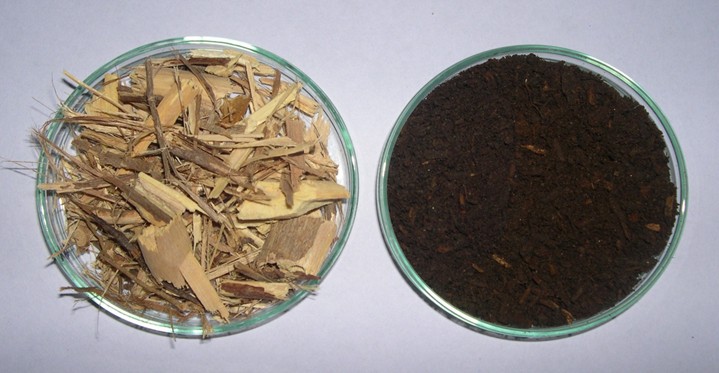
ICAR-CIRCOT has developed an accelerated process for composting using microbes for the preparation of bio-enriched compost from cotton stalks. The chipped cotton stalks are treated with CIRCOT developed microbial consortia to accelerate the composting process. Good quality compost is prepared in 45 and 60 days, respectively from wet and dry cotton stalks. In comparison, the compost from dry - and wet - untreated cotton stalks requires 90 and 60 days, respectively. Thus, 15- 30 days can be saved for the preparation of compost from wet and dry cotton stalks. The nutrient (NPK) level of cotton stalks compost is three times higher than farm yard manure (FYM). It is found that the seed cotton yield of cotton crop with the use of 5 t of cotton compost as modified integrated nutrient (NPK) management is at par with present integrated nutrient management with 12.5 t of farm yard manure. On-farm use of bio-waste of cotton stalks can save precious money of farmers by use of this technology.
- Microbial consortia is developed by ICAR-CIRCOT
- Yield of compost is 800 kg per tonne of cotton stalk
- Bio-enriched compost made out of cotton stalks which has higher NPK content (1.43:0.78:0.82) as compared to farm yard manure (0.5:0.2:0.5).
- Duration of composting is 45 days for wet and 60 days for dry cotton stalks
Stakeholders : Farmers, Organic growers, Fertilizer Industries
Benefit to Stakeholders :
- Same NPK availability with 5 t of bio-enriched cotton stalk compost and 12.5 t of farm yard manure
- Saving of Rs. 9000 per ha by replacing FYM (12 tonne) with cotton stalk compost (5 tonne)
- It can be used for soil health enrichment as a substitute to chemical fertilizers
- Farmers can fetch minimum income of Rs. 300/- per ton of cotton stalks used for composting
- Being organic manure, the soil health can be preserved and protected from the adverse effect of inorganic fertilisers
- Reduces environmental pollution that may arise due to burning of cotton stalks in the field
Benefit Cost Ratio : BC ratio: 1.10
Status of Popularisation :
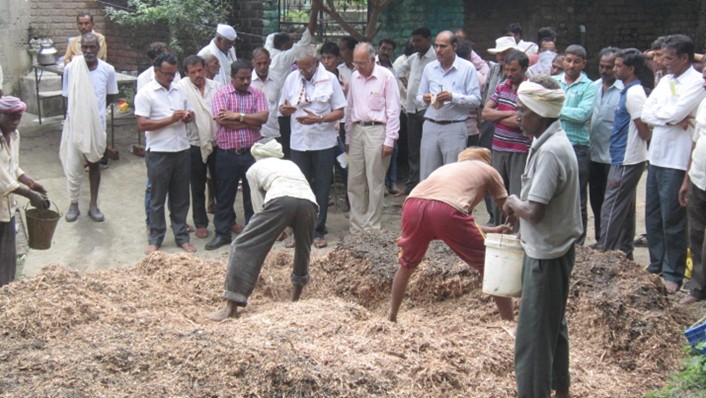
This technology was exhibited/ promoted through demonstrations, awareness programmes and hands on training to farmers of Wardha, Nagpur and Amaravati district of Maharashtra and Sirsa district of Haryana and many farmers have adopted this technology. Microbial consortia is being supplied to the farmers at reasonable rates for production of compost from cotton stalk. More than 5000 farmers have benefitted through its promotion. Popularized through MGMG programme.
- पिछले पृष्ठ पर जाने के लिए
- |
-
पृष्ठ अंतिम अद्यतन तिथि:21-11-2025 03:14 PM
Footer Logos