Indian Fibre Society and ICAR-Central Institute for Research on Cotton Technology Organized Invited Lecture Series on Global Cotton Quality and Sustainability
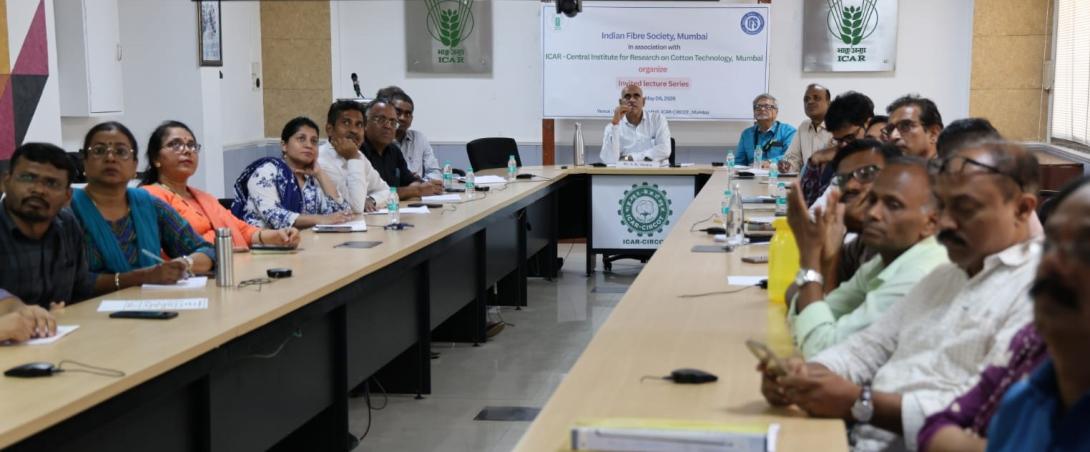
Indian Fibre Society (IFS), Mumbai in association with ICAR-Central Institute for Research on Cotton Technology, Mumbai organized an Invited Lecture Series in hybrid mode on May 06, 2026, at Mumbai. The programme commenced with a welcome address by Dr. A. S. M. Raja, Principal Scientist and Head QEID, ICAR-CIRCOT. In his inaugural remarks, Dr. S. K. Shukla, Director, ICAR-CIRCOT emphasized the increasing global importance of cotton fibre quality, traceability, and sustainability. He observed that while several cotton-producing countries are successfully exporting long and extra-long staple cotton, medium staple cotton has comparatively limited global demand and visibility. He stressed the need to understand the factors responsible for this trend and expressed interest in learning about sustainability standards and textile regulations being implemented in the USA and Europe.Dr. R. P. Nachane, President, IFS in his address, opined that fibre quality forms the foundation for producing superior yarns and textiles and plays a crucial role in improving the global competitiveness of Indian cotton.
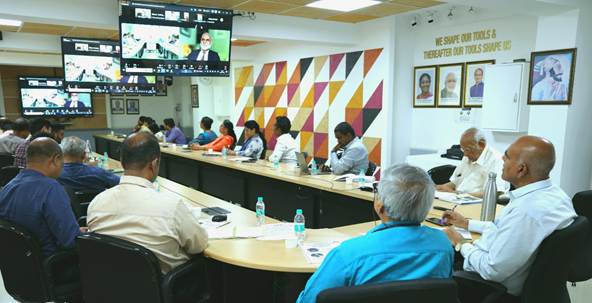
The first invited lecture on “Sustainability Labels for Both Conventional & Organic Cotton” was delivered by Dr. Jolien De Lepeleire from Centexbel, Belgium. She presented a comprehensive overview of emerging European Union regulations related to sustainable textile production, environmental compliance in cotton cultivation, Eco-design for Sustainable Products Regulation (ESPR), and the Digital Product Passport system. She also elaborated on internationally recognized sustainability certification systems and labels such as OEKO-TEX Standard 100, Made in Green, STeP, Organic Cotton, Leather Standard, and Eco Passport, highlighting their significance in ensuring environmentally safe, socially responsible, and traceable textile production.
The second lecture on “Cotton Fibre Quality Availability across the Globe” was delivered by Dr. Keshav Raj Kranthi, Chief Scientist, International Cotton Advisory Committee (ICAC), Washingtion DC, USA. He initiated the discussion with a critical perspective on whether current evaluations truly assess fibre quality or merely reflect agro-ecological outputs. Drawing from the global cotton quality database of the International Cotton Advisory Committee covering nearly 696 cotton varieties, he presented a comparative analysis of fibre quality trends among major cotton-producing countries. Dr. Kranthi highlighted that several African nations are producing cotton with superior fibre parameters and higher ginning percentage. He also observed that Indian cotton is often perceived internationally as having relatively lower GOT % and higher contamination levels. However, citing examples from countries such as Australia, Brazil, Türkiye, United States, and Benin, he emphasized that high productivity and superior fibre quality can coexist through appropriate varietal selection and crop management practices. Dr. Kranti opined that varietal cultivars may more suitable for high-density planting systems compared to hybrids, as achieving optimal control over multiple agronomic traits in hybrids remains challenging, in particular, traits such as excessive branching, increased plant height, and vigorous vegetative growth may adversely affect the suitability of hybrids for high-density planting conditions. He further discussed the influence of genotype, agro-climatic conditions, agronomic practices, planting density, nutrient management, and ginning systems on cotton fibre quality and advocated adoption of high-density planting systems for improving both yield and fibre characteristics in India.
During the interaction session, retired eminent cotton scientist and breeder Dr. B. M. Khadi expressed concern that Indian cotton breeding programmes continue to focus predominantly on medium staple cotton whereas future breeding efforts should increasingly align with industrial demand for longer and superior-quality fibres. The programme concluded with remarks by Dr. S. K. Shukla and Dr. R. P. Nachane, who summarized the key deliberations and reiterated the importance of fibre quality, sustainability, and traceability in strengthening the Indian cotton value chain and enhancing its global competitiveness. The programme witnessed enthusiastic participation from eminent scientists, cotton breeders from ICAR-Central Institute for Cotton Research, cotton stakeholders, technical officers, researchers, and staff members of ICAR-CIRCOT. The formal vote of thanks was delivered by Dr. A. Arputharaj, Senior Scientist, CPBD.
- पिछले पृष्ठ पर जाने के लिए
- |
-
पृष्ठ अंतिम अद्यतन तिथि:11-05-2026 05:01 PM
Footer Logos